Journals
-
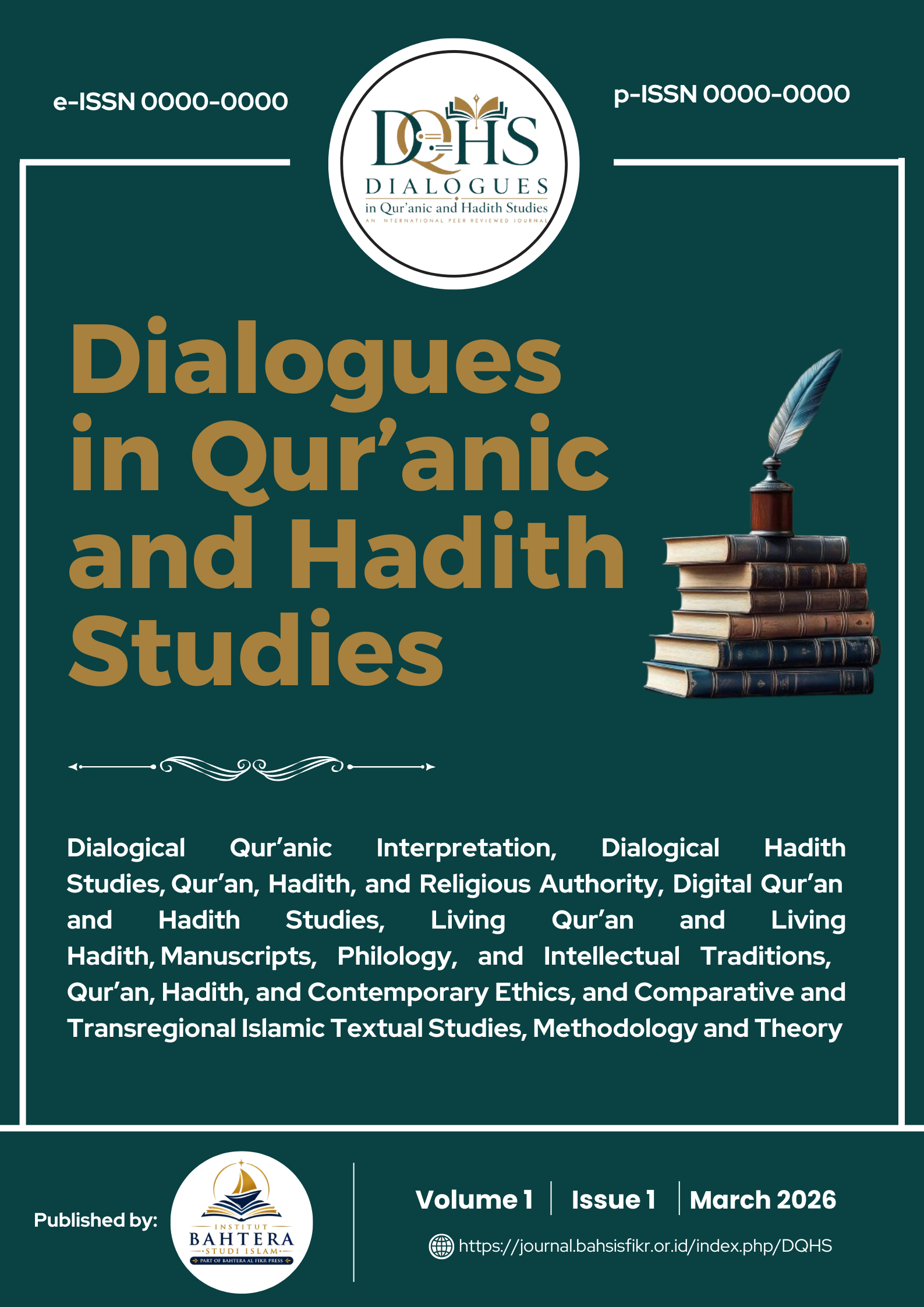
Dialogues in Qur’anic and Hadith Studies
Dialogues in Qur’anic and Hadith Studies is a peer-reviewed international journal that publishes original scholarly works in the fields of Qur’anic studies, Hadith studies, Islamic hermeneutics, tafsir, hadith criticism, manuscript studies, living Qur’an and Hadith, and contemporary Islamic thought. The journal aims to serve as an academic platform for researchers who critically examine Islamic sacred texts through textual, historical, philosophical, linguistic, sociological, and interdisciplinary approaches. The journal is committed to promoting high-quality research that bridges classical Islamic intellectual traditions and contemporary academic discourse. It welcomes contributions that explore the interpretation, transmission, authority, reception, and application of the Qur’an and Hadith in various historical and contemporary contexts. Through a rigorous double-blind peer-review process, Dialogues in Qur’anic and Hadith Studies ensures that every published article demonstrates originality, methodological soundness, scholarly relevance, and ethical responsibility. The journal is intended to contribute to the development of global Islamic studies and to strengthen academic dialogue among scholars of the Qur’an, Hadith, and Muslim intellectual traditions.
-
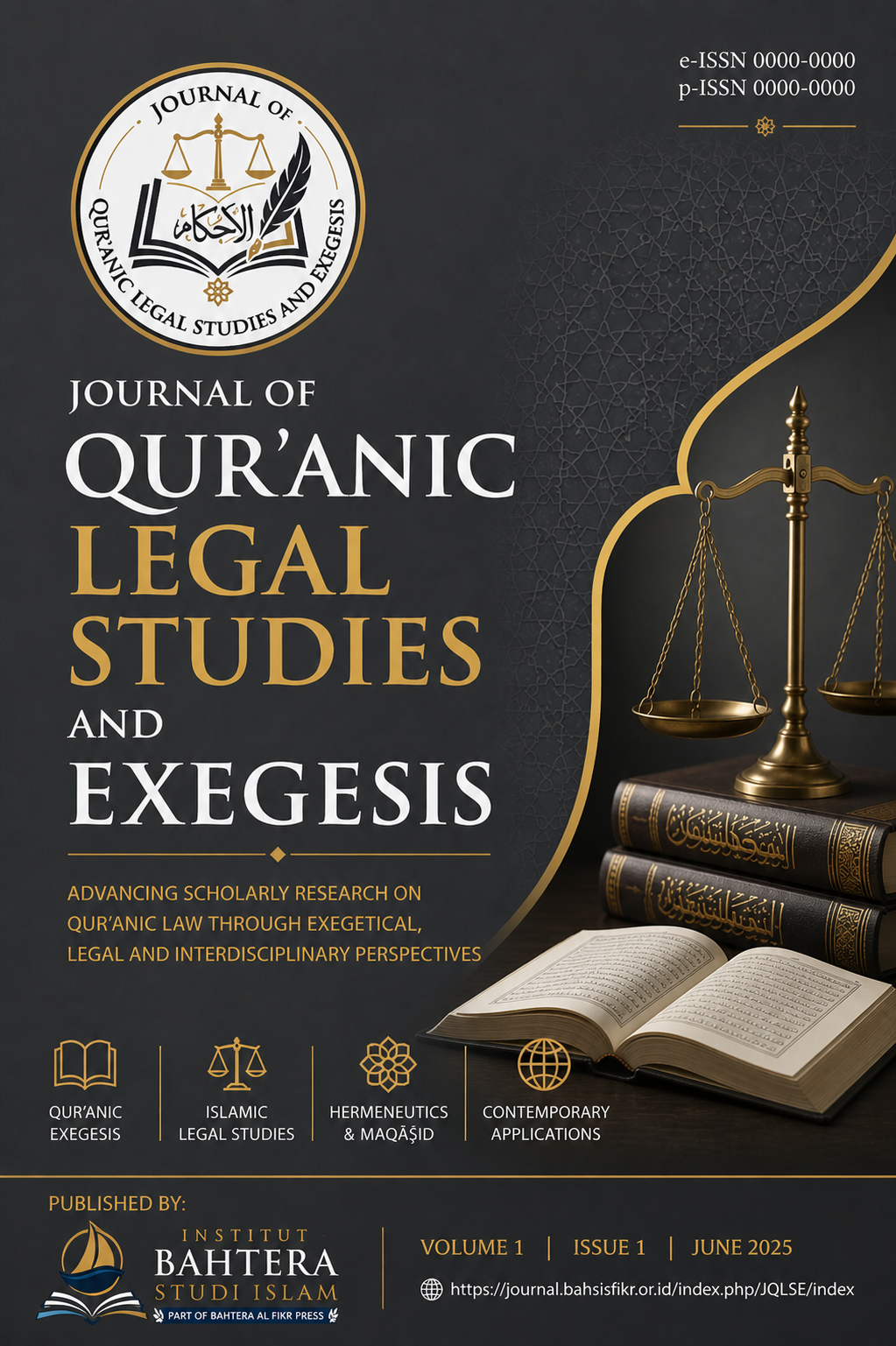
Journal of Qur’anic Legal Studies and Exegesis
Journal of Qur’anic Legal Studies and Exegesis is an international peer-reviewed journal dedicated to advancing scholarly research on the interpretation of Qur’anic legal verses and their role in Islamic legal thought. The journal publishes high-quality articles that integrate classical exegesis with contemporary approaches, including legal theory, hermeneutics, and interdisciplinary studies. It aims to provide a global platform for critical and analytical discussions on Qur’anic law, addressing both theoretical developments and contemporary issues relevant to diverse socio-legal contexts.
-
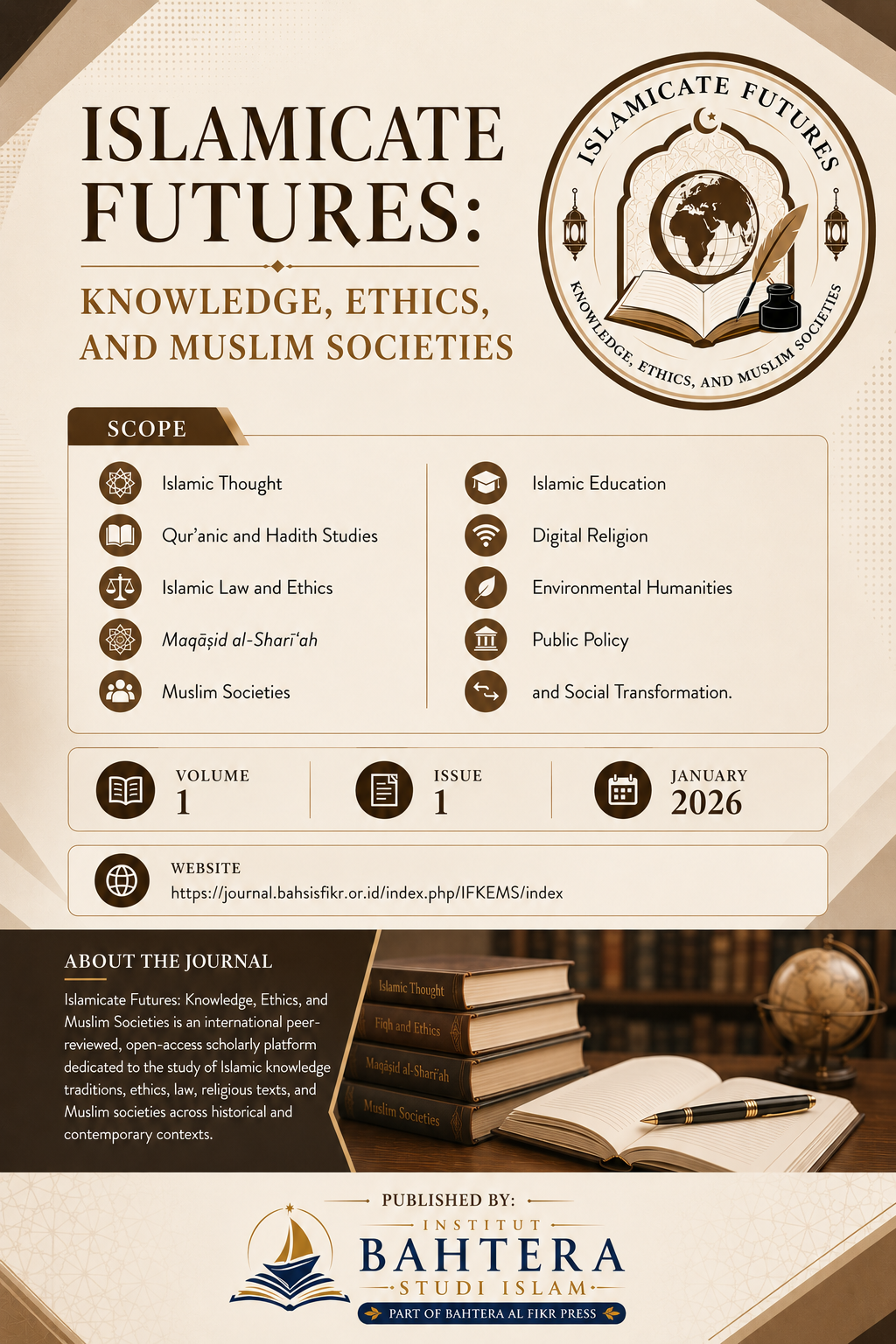
Islamicate Futures: Knowledge, Ethics, and Muslim Societies
Islamicate Futures: Knowledge, Ethics, and Muslim Societies is an international peer-reviewed scholarly platform dedicated to the study of Islamic knowledge traditions, ethics, law, religious texts, and Muslim societies across historical and contemporary contexts. The journal seeks to advance critical, empirical, and theoretically grounded scholarship that connects Islamicate intellectual heritage with emerging global challenges and future-oriented debates. The journal welcomes original research articles, review articles, and critical conceptual papers that examine Islamic thought, Qur’anic and hadith studies, Islamic law and ethics, Muslim societies, education, digital religion, environmental humanities, public policy, and social transformation. It particularly encourages interdisciplinary contributions that engage with Islamic traditions while addressing contemporary issues such as technology, artificial intelligence, sustainability, governance, human dignity, justice, and the changing dynamics of Muslim communities worldwide.
Islamicate Futures aims to become a leading venue for scholars working across Islamic studies, religious studies, humanities, social sciences, law, education, philosophy, cultural studies, and digital society. The journal prioritizes manuscripts that demonstrate methodological rigor, theoretical clarity, originality, international relevance, and clear contribution to the development of contemporary Islamic and Islamicate studies. -
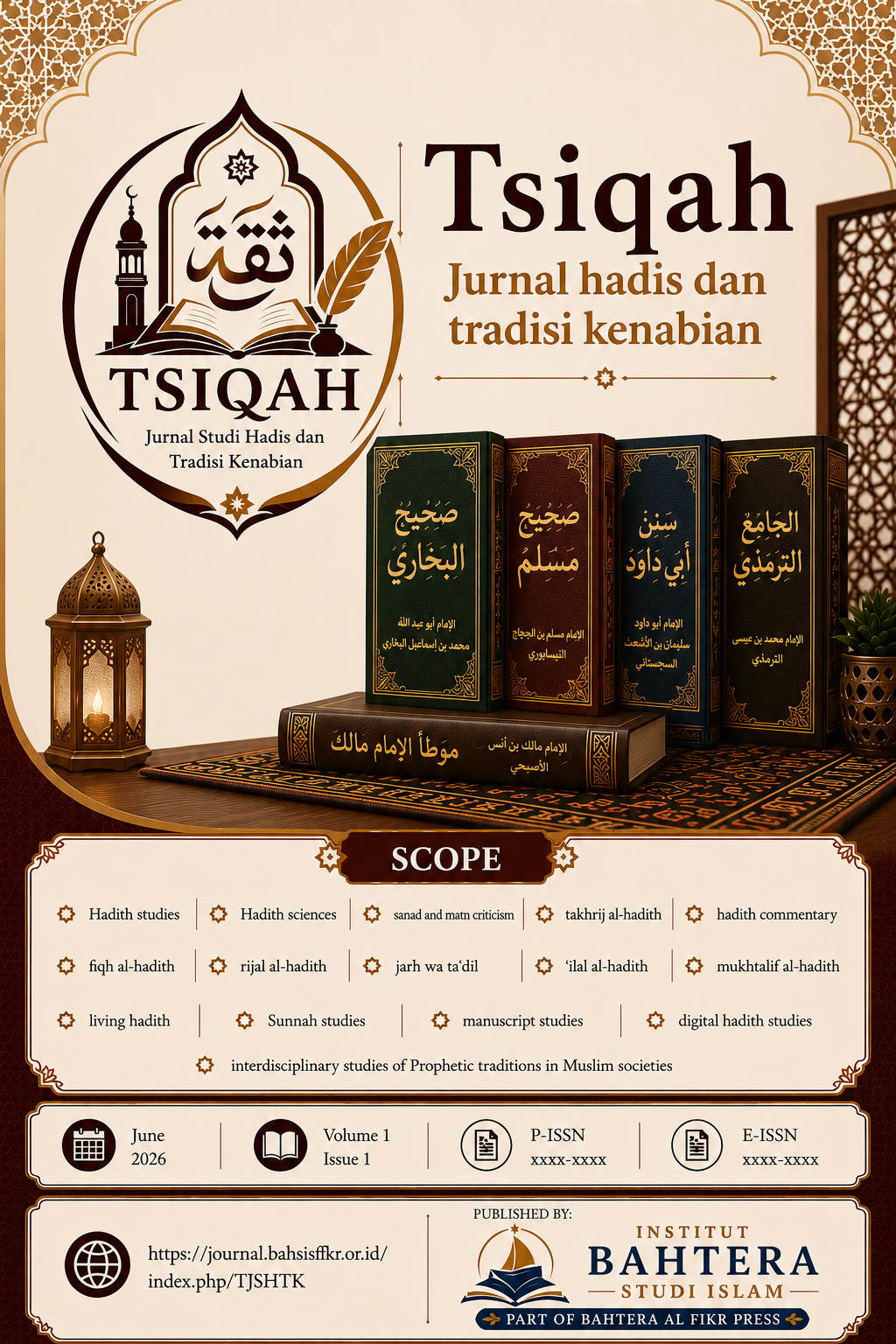
TSIQAH: Journal of Hadith and Prophetic Tradition
Tsiqah: Jurnal Studi Hadis dan Tradisi Kenabian is a peer-reviewed academic journal dedicated to the advancement of Hadith studies, Hadith sciences, Sunnah studies, and Prophetic traditions. The journal publishes original research articles, conceptual studies, critical reviews, and manuscript-based research addressing various dimensions of Hadith scholarship from classical and contemporary perspectives.
The journal focuses on sanad and matn studies, Hadith criticism, takhrij al-hadith, Hadith commentary, fiqh al-hadith, rijal al-hadith, jarh wa ta‘dil, ‘ilal al-hadith, mukhtalif al-hadith, living hadith, Sunnah studies, and the intellectual traditions of Hadith scholars. It also welcomes interdisciplinary studies that connect Hadith and Prophetic traditions with social, educational, legal, cultural, gender, digital media, technological, religious moderation, and contemporary Muslim society issues.
Tsiqah is committed to promoting scholarly integrity, academic objectivity, rigorous research methodology, and publication ethics. All submitted manuscripts undergo editorial screening and peer-review processes to ensure their quality, originality, and scholarly contribution to the development of Hadith studies and Prophetic traditions.
-
Global Islamic Philanthropy Network
Global Islamic Philanthropy Network (GIPN) is an international, peer-reviewed, and interdisciplinary journal dedicated to advancing scholarly knowledge, critical inquiry, and evidence-based practice in the field of Islamic philanthropy. The journal provides a global academic platform for researchers, scholars, practitioners, policymakers, and institutions to examine contemporary developments in zakat, waqf, infaq, sadaqah, Islamic social finance, humanitarian action, and other forms of faith-based philanthropy.
GIPN encourages theoretical, empirical, comparative, and policy-oriented studies that explore the governance, management, social impact, institutional development, digital transformation, and sustainability of Islamic philanthropic practices. Particular attention is given to research that connects academic scholarship with practical and policy challenges, strengthens collaboration across countries and disciplines, and contributes to addressing poverty, inequality, social exclusion, humanitarian needs, and sustainable development.
Reflecting the broader mission of the Global Islamic Philanthropy Network, the journal seeks to bridge the gap between academic research and philanthropic practice by facilitating the exchange of ideas, research findings, innovations, and policy perspectives among diverse stakeholders. LFA-GIPN (1)
Through rigorous scholarly publication and international knowledge exchange, Global Islamic Philanthropy Network aims to contribute to the development of a robust, inclusive, accountable, and globally connected knowledge ecosystem for Islamic philanthropy.
-
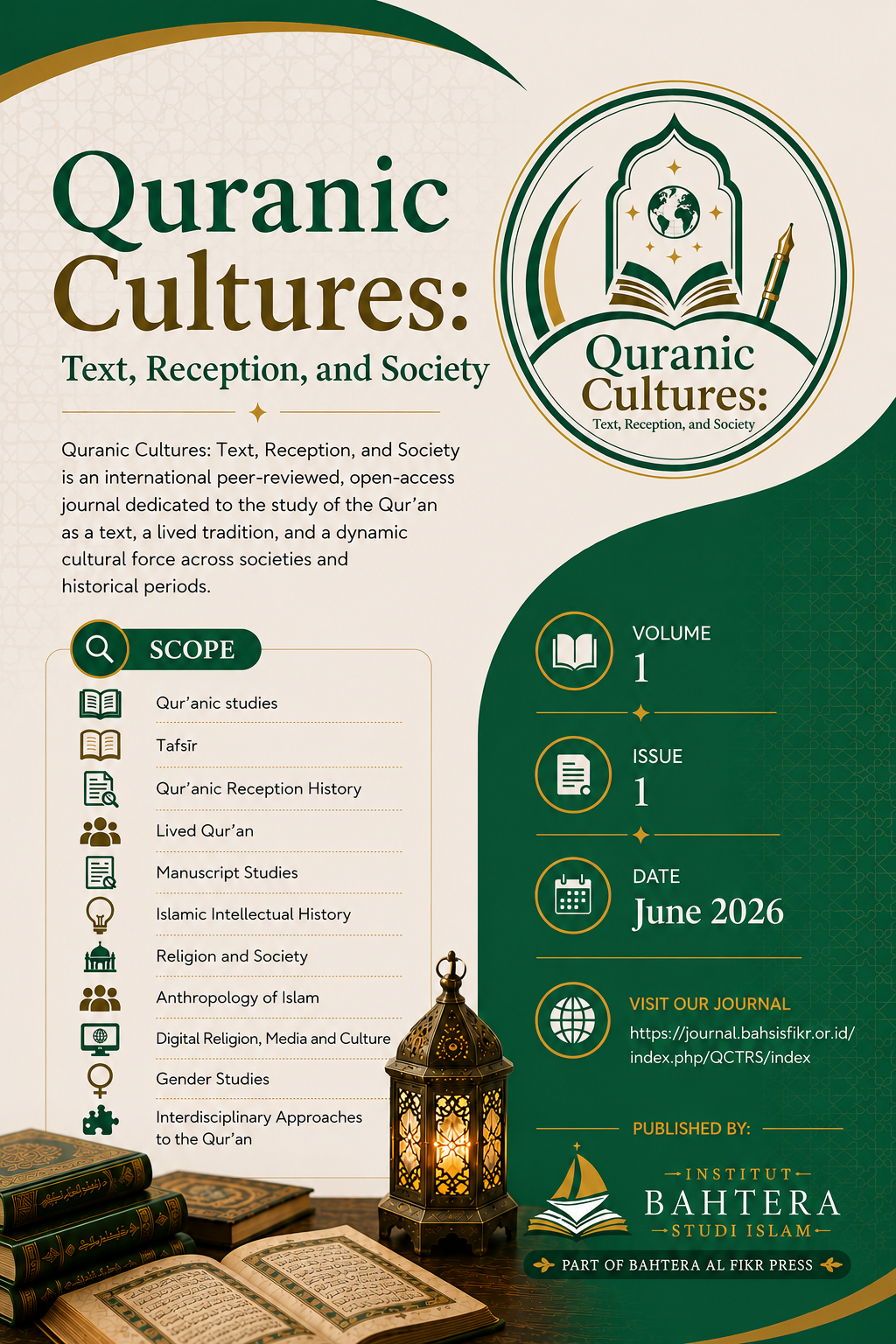
Quranic Cultures: Text, Reception, and Society
Quranic Cultures: Text, Reception, and Society is a peer-reviewed academic journal that publishes high-quality research on the Qur’an through interdisciplinary approaches. The journal aims to integrate classical Islamic scholarship with contemporary perspectives across fields such as humanities, social sciences, science, and technology.
JIQS welcomes original articles that explore Qur’anic studies, including tafsīr, thematic interpretation, linguistic analysis, and the relationship between the Qur’an and current global issues. All submissions undergo a rigorous double-blind peer review process and are published in English to ensure international visibility.
-
Journal of Islamic Political and Social Studies
Journal of Islamic Political and Social Studies (JIPSS) is a peer-reviewed academic journal that focuses on the intersection of Islamic studies, political science, and social sciences. The journal publishes original research on topics such as Islamic political thought, governance, social transformation, civil society, and the relationship between religion and state in contemporary and historical contexts.
JIPSS promotes interdisciplinary approaches and welcomes contributions from scholars across related fields. All submissions undergo a double-blind peer-review process to ensure academic quality and integrity. The journal is published biannually and aims to contribute to global scholarly discourse on Islam, politics, and society.
-
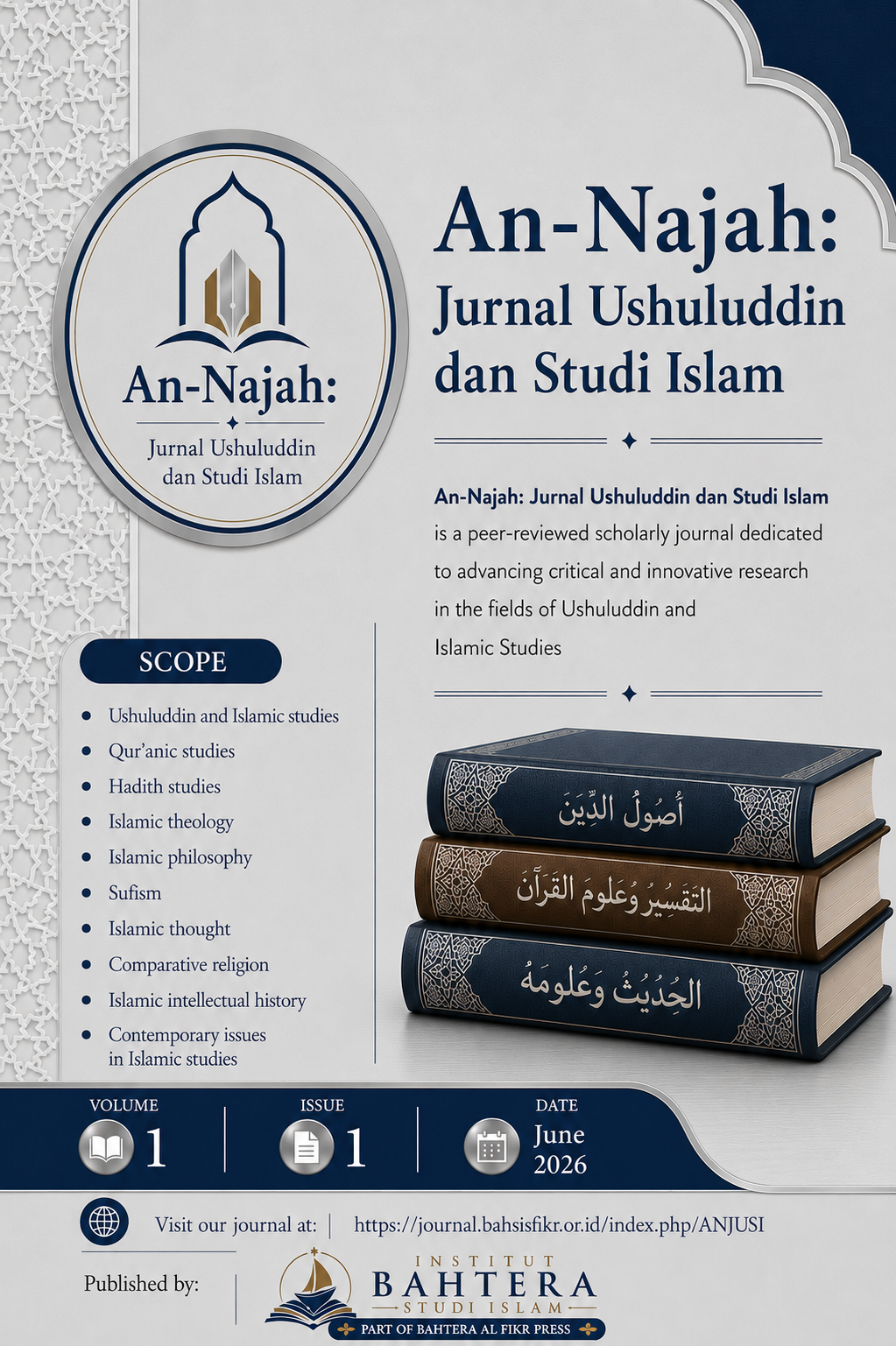
An-Najah: Jurnal Ushuluddin dan Studi Islam
An-Najah: Jurnal Ushuluddin dan Studi Islam is a peer-reviewed scholarly journal dedicated to the advancement of research and academic discourse in the fields of Ushuluddin and Islamic Studies. The journal serves as a platform for the dissemination of original research, theoretical studies, and critical analyses that contribute to the development of Islamic scholarship from classical, contemporary, and interdisciplinary perspectives. The journal welcomes contributions covering a broad range of topics, including Qur’anic studies, Hadith studies, Islamic theology (kalam), Islamic philosophy, Sufism, Islamic thought, comparative religion, Islamic intellectual history, and contemporary issues in Islamic studies. By encouraging rigorous academic inquiry and constructive scholarly engagement, the journal seeks to promote innovative perspectives and meaningful contributions to the global discourse on Islam and Muslim societies. An-Najah: Jurnal Ushuluddin dan Studi Islam upholds the highest standards of academic integrity, originality, methodological rigor, and ethical publishing practices. All submissions undergo a double-blind peer-review process to ensure the quality, credibility, and scholarly significance of published works. The journal is committed to fostering inclusive, critical, and globally relevant scholarship that bridges traditional Islamic intellectual heritage with contemporary academic developments.
-
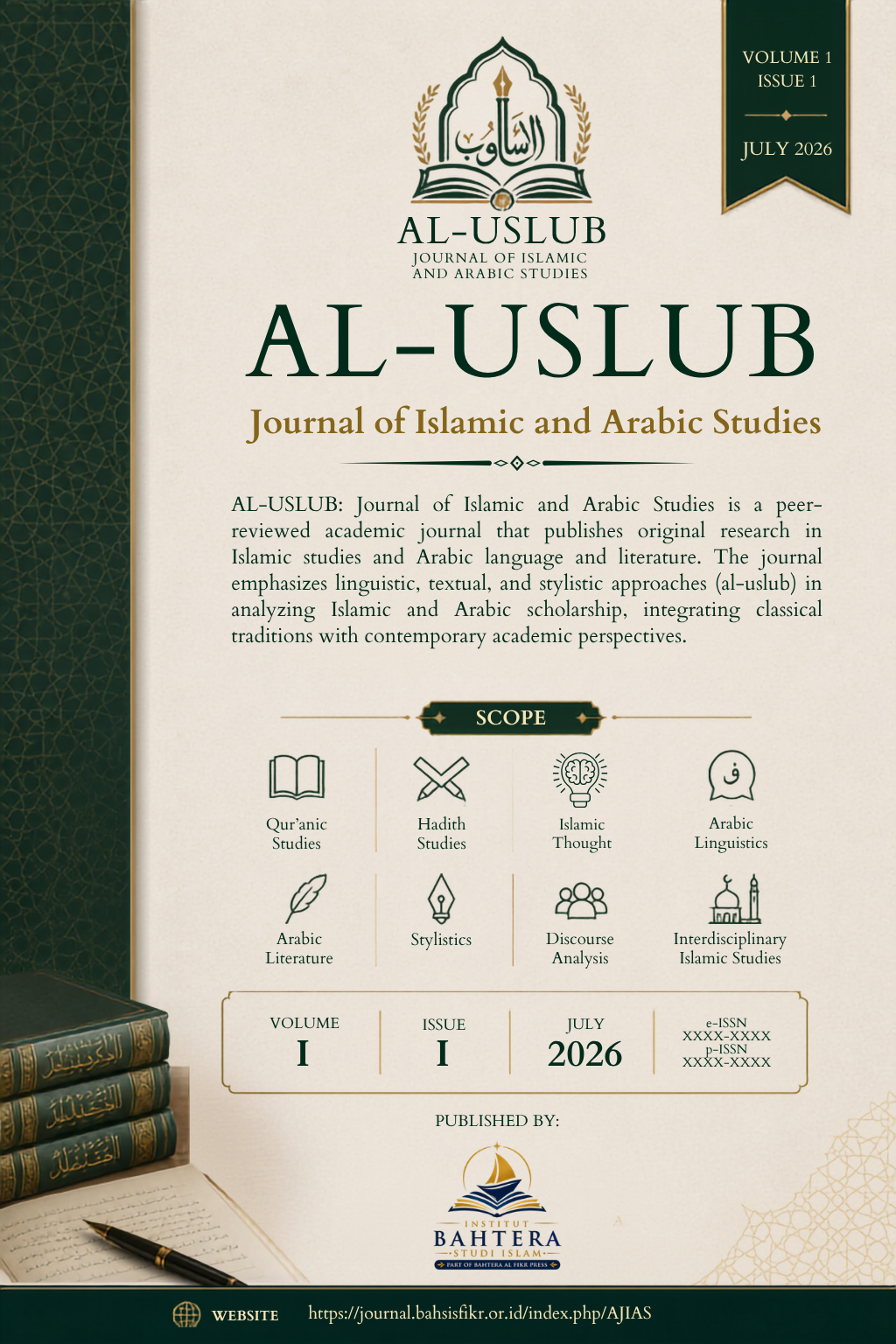
AL USLUB :Journal of Islamic and Arabic Studies
AL-USLUB: Journal of Islamic and Arabic Studies is a peer-reviewed academic journal that publishes original research in the fields of Islamic studies and Arabic language and literature. The journal focuses on exploring linguistic, textual, and stylistic aspects (al-uslūb) of Islamic and Arabic scholarship, integrating classical traditions with contemporary academic approaches. It welcomes interdisciplinary studies, including Qur’anic and Hadith studies, Arabic linguistics, literature, and modern theoretical perspectives. All submissions undergo a rigorous double-blind peer-review process to ensure quality and academic integrity.